method %!d(float64=04) · 2026-09-01
Lactic fermentation
The wet version — whole plant in its own juice, no added water
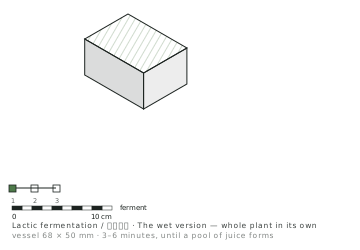
How it works
Salt at 2 % of the plant's weight draws water out of the cells by osmosis, creating brine from the plant itself. That brine has the same selective effect as an added brine: Lactobacillus lives, spoilage organisms do not. The difference is that here there is no water to dilute the plant's own sugars, so fermentation is faster and the acidity at day seven is usually higher than a brine pickle reaches in three weeks.
Lactic fermentation and salt-brine pickling are the same microbiology with different water. Here the salt is worked into the plant directly and the plant’s own juice becomes the brine, which gives a denser, more intensely flavoured product and a much lower risk of dilution error. It is the method for anything juicy — knotweed, cabbage-family shoots, fruit — and it is the wrong method for anything dry and fibrous.
| Parameter | Value | Why it is this number |
|---|---|---|
| Salt | 2.0 % of the prepared plant's weight | Weigh the plant after cutting. 1 kg of prepared knotweed takes 20 g of salt. |
| Salt type | Non-iodised, fine, no anti-caking agent | Coarse salt does not dissolve evenly on the surface of a leaf and creates hot spots. |
| Massage time | 3–6 minutes, until a pool of juice forms | Under-massaged plant will not make enough brine and the top will float above the liquid. |
| Pressing weight | 2–3 kg on a 1 L jar | Must keep the plant under its own juice for the first week, which is when it floats. |
| Temperature | 18–22 °C | Warmer than brine pickling. The plant's own sugars drive a faster ferment and a warmer start selects the right bacteria quickly. |
| Headspace | 2 cm, in a jar with an airlock or a loose lid | This ferment is vigorous. A 1 L jar of knotweed will climb the sides within 24 hours. |
| Time — soft plant | 7–10 days | Knotweed shoot, borage, clover, chickweed. |
| Time — firm plant | 21–28 days | Burdock root, horseradish, cattail rhizome, hazel. |
| pH at completion | Below 3.8 | Lower than brine pickling, because there is more sugar available to the bacteria. |
| Brine coverage | At least 2 cm above the plant, from day one | If the plant has not given enough juice within two hours, add a 2 % brine to top up — never plain water. |
Procedure
Cut the plant small — 1 cm pieces for leaf, 3 mm slices for root. Surface area is what releases the juice.
Weigh it, then add 2 % salt by weight. Massage with clean hands for three to six minutes until the plant is glossy and a pool of juice has formed at the bottom of the bowl.
Pack into the jar a handful at a time, pressing down hard with a fist or a tamper so no air pockets remain. Liquid should rise past the plant as you press.
Add the pressing weight, cap with an airlock or a lid that is screwed on but not tight, and stand the jar on a plate — it will overflow on day two.
Press the plant back under the brine daily for the first five days. This is the entire daily maintenance of the method.
Taste at day seven. Ready when sharp and clean, and pH is below 3.8. Cap tight and refrigerate.
Equipment
| Vessel | Why this one |
|---|---|
| 1 L wide-mouth jar plus a smaller jar as a weight | A smaller jar filled with water fits inside the mouth and presses evenly. |
| Fermentation airlock with a grommet lid | The ferment is vigorous enough that a loose lid will let in fruit flies. |
| Large non-metal bowl | For massaging. The salt and acid attack metal and give a metallic taste. |
| A plate under the jar | Non-negotiable. The brine will overflow on day two. |
What goes wrong
- The plant floats above the liquid Not massaged long enough, or not enough weight. Massage until the juice pools, and press hard when packing. Top up with 2 % brine, never water.
- It is fizzy and overflows the jar on day two Normal and correct. This is why the plate is under the jar. Press it down and keep going.
- The result is soft and slimy Too warm, or too little salt. Above 24 °C the wrong organisms win. Check the temperature before starting another batch.
- It smells of alcohol or vinegar rather than sour The jar was too warm at the start and yeasts established first. Discard, and start cooler.
- Nothing is happening after four days Too cold, or iodised salt, or the massaging did not release enough juice. Move to 20 °C and top up with 2 % brine.