method %!d(float64=02) · 2026-08-12
Salt-brine pickling
Two per cent salt, three weeks, and a jar that tells you when it is ready
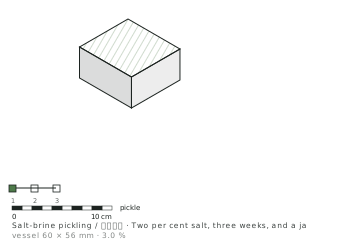
How it works
A brine between 2 % and 3 % salt by weight of the total jar contents selects for Lactobacillus species, which tolerate salt, and against most spoilage organisms and moulds, which do not. The bacteria consume sugars in the plant tissue and produce lactic acid, dropping the pH below 4.0 within about ten days. Below pH 4.0 the product is stable. Everything about the method — the weight, the submersion, the headspace — exists to keep the environment at that salt level and free of oxygen until the pH has fallen.
Pickling here means one thing specifically: a salt brine strong enough to favour the lactic acid bacteria already living on the leaf and strong enough to hold back everything else. It is not vinegar pickling. The finished product is sour because bacteria made lactic acid in the jar, not because you poured acid in, and the difference in flavour is the whole point.
| Parameter | Value | Why it is this number |
|---|---|---|
| Brine strength — soft leaf | 2.0 % of total weight | Nettle, chickweed, sorrel, clover, borage. 2 % ferments fast; check daily. |
| Brine strength — firm leaf or seed | 2.5 % | Knotweed, burdock, hawthorn, rowan, hazel. |
| Brine strength — root or bark | 3.0 % | Burdock root, horseradish, cattail rhizome, birch inner bark. Higher salt is needed because roots carry more spoilage organisms from the soil. |
| Salt type | Non-iodised, no anti-caking agent | Iodine inhibits the bacteria; anti-caking agents cloud the brine. Cheap pure sea salt or pickling salt. |
| Weight | 1 kg of prepared plant : 1.5 kg of brine | Weigh the water, not the jar. 1 L of water is 1000 g, so 2 % of 1500 g total is 30 g of salt. |
| Temperature | 16–20 °C | Below 14 °C it stalls; above 23 °C it goes soft and yeasty. |
| Submersion | Vegetable at least 3 cm below the surface, always | Anything above the brine grows mould. This is the single failure mode that ruins most batches. |
| Headspace | 3 cm in a 1 L jar | CO₂ has to have somewhere to go; a 1 L jar with 2.5 cm of headspace will overflow. |
| Time | Leaf 10–14 days; firm 21 days; root 28 days | Then move to the fridge. The clock is on the pH, not the calendar — see the check below. |
| pH at completion | Below 4.0 | Measure it. A cheap pH strip is the difference between a method and a guess. |
Procedure
Weigh the prepared plant. Weigh the water. Dissolve the salt in the water at the ratio above — a 2 % brine is 20 g of salt per litre of water when the plant is added 1:1.5.
Pack the plant into the jar firmly but without bruising it, to within 3 cm of the rim. Bruised tissue goes soft.
Pour the brine over until everything is at least 3 cm under the surface. Weigh it down — a clean stone, a small ziplock bag of brine, or a glass weight.
Cover loosely. The jar must be able to vent CO₂ — a lid screwed on but not tightened, or an airlock. A sealed jar will explode.
Keep at 16–20 °C and out of light. Press the vegetable back under the brine daily for the first five days, when the CO₂ pushes it up.
At day 10, taste and measure pH. Ready when it is sour to your taste and the pH is under 4.0. Then cap tight and refrigerate.
Equipment
| Vessel | Why this one |
|---|---|
| 1 L wide-mouth glass jar | Wide mouth so you can pack and weigh down with your hand. Never metal — the acid attacks it. |
| Glass weight or clean river stone | Submersion is the whole method. A boiled smooth stone is the cheapest reliable answer. |
| Digital scale to 1 g | Brine percentages are meaningless without one. |
| pH strips, 3.5–5.5 range | The method's completion test. Tasting is not a measurement. |
What goes wrong
- White film on the surface Kahm yeast, not mould — harmless but it means oxygen got in. Skim it, check pH, and if it is under 4.0 the batch is fine. Improve the weighting.
- Furry green, blue or black growth Mould. Discard the whole jar, not just the top. Mould hyphae run deep into the brine and the mycotoxins are not removed by scraping.
- The vegetable is soft and slimy Too warm, or too little salt, or bruised during packing. Check the temperature and weigh the brine rather than judging it by taste.
- It smells like rotten eggs or cheese Wrong bacteria. Discard. This means the salt was too low or the jar was too warm at the start, letting the wrong organisms establish.
- It has not soured after three weeks Too cold, or the salt is iodised. Move it somewhere warmer and start the next batch with non-iodised salt.