WO-005 · work order · 2026-08-20
Elder
Sambucus nigra
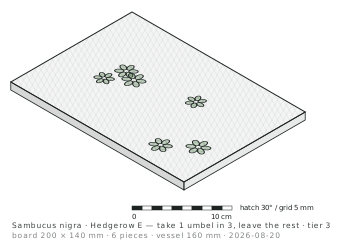
Elder is two crops in one bush, and the two are nothing like each other. The flower is a muscat-and-lychee perfume that has to be captured in syrup or fizz within about ten days of opening. The berry, three months later, is dark, tannic and needs cooking and sugar before it is worth anything. Both are excellent; treating them as the same ingredient is where most people go wrong.
Flower
chilled 2 daysUmbels fully open, dry, and the florets release with a light pull.
- 1
Drying — 35 °C, 3 h
Mesh tray in a single loose layer ≤ 2 cm deep, 1–2 m/s airflow - 2
Lactic fermentation — in the cordial, 48 h
1 L wide-mouth jar, smaller jar as weight, 2 cm headspace, plate underneath - 3
Oil and vinegar infusion — fresh in gin, 1:6, 7 days
Dark narrow-neck bottle; candy thermometer for the 60 °C ceiling - 4
Candying and sugar preservation — fritters at 180 °C
Jam thermometer to 110 °C, wire rack over a tray for 24–48 h of drying
| Operation | Parameter · duration |
|---|---|
| Harvest cue | Umbels fully open, dry, and the florets release with a light pull. |
| Blanch | not required — used raw |
| De-bitter | None for syrup. For fritters, dust and fry in a 180 °C batter without any pre-treatment. |
| Chilled | 2 days |
Fruit
chilled 4 daysClusters hang downward and the berries are black-purple with no red left.
- 1
Salt-brine pickling — 2 % brine, 14 days
1 L wide-mouth jar, glass weight, 3 cm headspace - 2
Drying — 55 °C, 8 h
Mesh tray in a single loose layer ≤ 2 cm deep, 1–2 m/s airflow - 3
Lactic fermentation — 3 % sugar, 10 days
1 L wide-mouth jar, smaller jar as weight, 2 cm headspace, plate underneath - 4
Oil and vinegar infusion — dried, 1:5, 28 days
Dark narrow-neck bottle; candy thermometer for the 60 °C ceiling - 5
Candying and sugar preservation — jelly, 450 g sugar : 600 mL juice
Jam thermometer to 110 °C, wire rack over a tray for 24–48 h of drying
| Operation | Parameter · duration |
|---|---|
| Harvest cue | Clusters hang downward and the berries are black-purple with no red left. |
| Blanch | not required — used raw |
| De-bitter | Simmer 25 min — this destroys sambunigrin. Never eat raw. |
| Chilled | 4 days |
Cutting flower at the right hour
Pick on a dry morning after two or three rainless days, between 10 a.m. and 2 p.m. The night before, the umbel has been sitting in dew and the nectar is diluted; by mid-morning the sun has dried it and the aroma is at full strength. Umbels picked wet or in the evening smell of almost nothing and make a flat syrup.
Cut the whole umbel with 2 cm of stalk and drop it straight into a flat basket — never a bag, which crushes the florets and starts them browning within the hour. Leave a third of the umbels on each bush; those are next autumn’s berries, and the bush needs them to feed the crop you will come back for.
Syrup, cordial and the 48-hour rule
The standard cold method: 30 large umbels, 1.5 kg sugar, 1.5 L water, 2 lemons sliced, 40 g citric acid. Bring the sugar and water to the boil, pour over the flowers in a large bowl, add the lemon and citric acid, cover and leave 48 hours. Strain through muslin and bottle. The acid is not for flavour — it drops the pH below 3.5, which is what makes the cordial safe to keep at room temperature for a year.
Do not leave it longer than 72 hours. Beyond that the florets start to break down and release a green, stalky bitterness that no amount of sugar covers. If you want a stronger cordial, use more umbels, not more time.
For a champagne-style fizz, use the same cordial at 1 part to 9 parts water in a swing-top bottle, add a pinch of yeast, and leave four days at 20 °C then chill. The bottle must be a pressure-rated one; elderflower fizz in a screw-top wine bottle is a well-documented way to redecorate a kitchen.
The berry, and why it must be cooked
Raw elderberries contain sambunigrin, a cyanogenic glycoside, and eating them raw causes nausea and vomiting within a few hours. Cooking destroys it. The usual failure is not a stewed berry, it is a handful eaten off the bush by someone who has heard they are edible, or an undercooked jelly where the fruit was only warmed.
For jelly, simmer 1 kg of stripped berries with 200 mL water for 25 minutes — a full simmer, not a warming — then strain through a jelly bag overnight, and use 450 g of sugar per 600 mL of juice with 1 lemon. The set is reliable because elderberries are naturally high in pectin. The same simmered pulp, pushed through a sieve, makes a dark, tannic ketchup with 100 mL vinegar and 150 g sugar per 500 g of pulp.
Identification note: Elderflower smells of muscat and is safe; elderberries must be cooked. Do not confuse elder with dwarf elder (Sambucus ebulus), a low herbaceous plant with an unpleasant smell whose berries are more toxic — elder is a woody shrub or small tree with corky, fissured bark.